Physiotherapist-guided rehabilitation that helps women rebuild core strength, restore movement, and recover safely after caesarean birth.
If your core feels gone after surgery, you are not broken. It simply needs the right recovery plan.
Many mums across Regents Park and Brisbane South feel unsure about exercise after a C-section. The scar feels tight, the abdominal wall feels weak, and regular gym workouts or generic Pilates classes feel unsafe.
With the right physiotherapy guidance and a supportive program, your body can rebuild strength and confidence again.
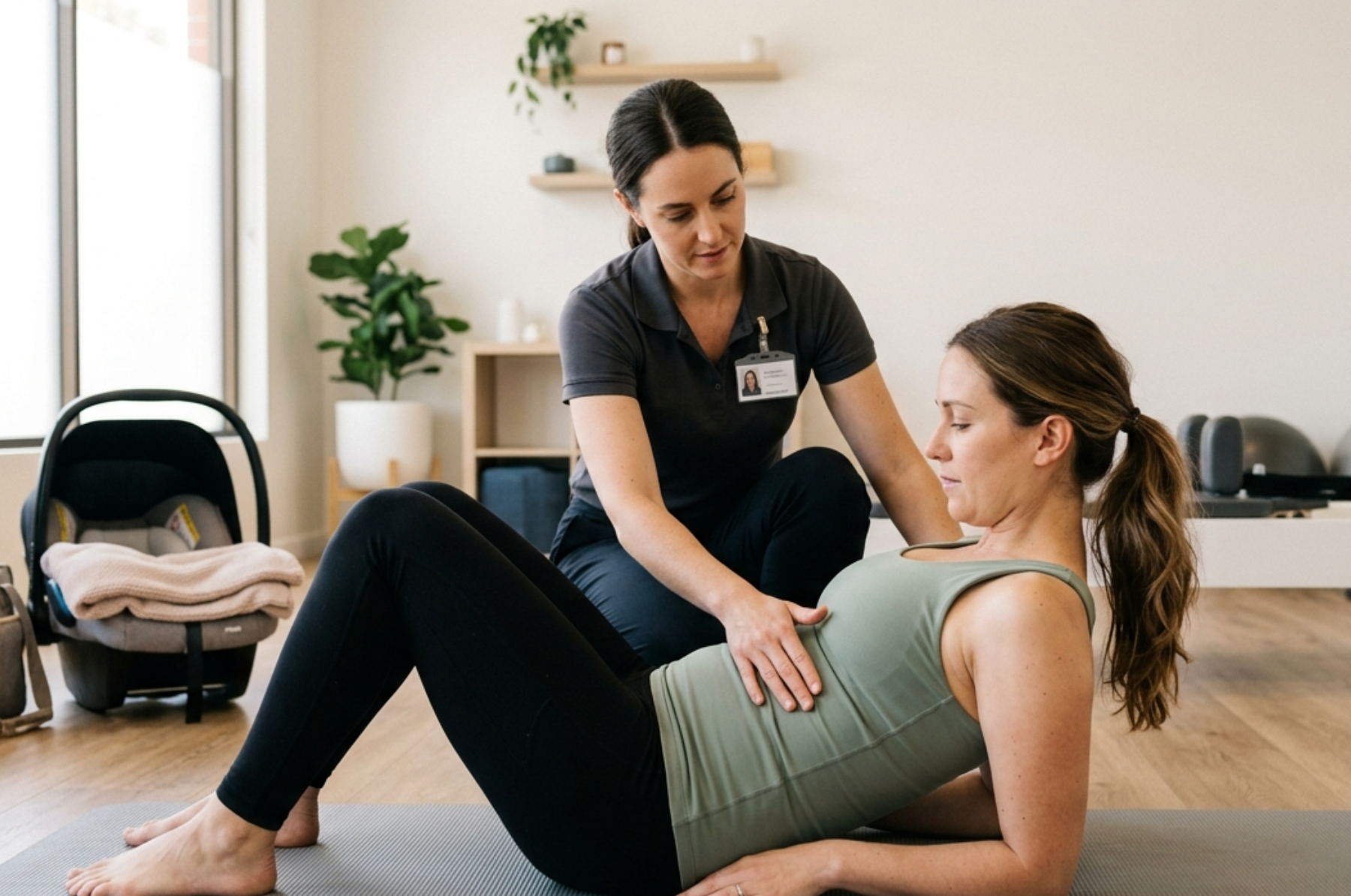
At Get Better Physiotherapy in Regents Park, our physiotherapists combine postnatal physiotherapy with clinical Pilates classes to help women safely recover after C-section surgery. Each class and exercise program is tailored to your stage of healing so you can move safely without fear of damaging your scar or core.
C-Section Recovery: Safe Movement and Strength After Caesarean Birth
C-section recovery is a gradual process that involves healing of the abdominal wall, restoring core stability, and retraining pelvic floor function.
During caesarean birth, several layers of tissue are affected, including skin, connective tissue, and abdominal muscles. Recovery involves allowing these structures time to heal while gradually reintroducing movement and strength work.
Guided physiotherapy rehabilitation can help:
- rebuild abdominal strength safely
- restore pelvic floor and core function
- reduce back pain and muscle tension
- support a safe return to exercise
Many women feel unsure about when to start moving again. A structured postnatal physiotherapy and Pilates program helps rebuild strength step by step.
Our Regents Park clinic supports women across Brisbane, Browns Plains, Greenbank, and Flagstone who want expert guidance after caesarean birth.
How a Caesarean Birth Affects Your Core and Body
Pregnancy and surgery change how the body functions. These changes affect muscles, posture, and the way pressure moves through the core.
Abdominal Muscle and Tissue Healing
During a caesarean birth, the abdominal wall is separated to allow delivery of the baby. After surgery, the body begins healing the affected tissue layers.
Common recovery concerns include:
- abdominal weakness
- scar sensitivity or pulling
- reduced muscle control
- diastasis recti (abdominal separation)
Healing of these tissues can take several months. Physiotherapy and targeted exercise help the muscles reconnect and restore function.
Core Stability and Pressure Management
The core is more than just the abdominal muscles. It includes the diaphragm, pelvic floor, deep abdominal wall, and spinal stabilising muscles.
After pregnancy and surgery, these systems can become uncoordinated.
This may lead to:
- lower back pain
- pelvic instability
- poor pressure control during movement
- difficulty returning to exercise
Clinical Pilates exercises focus on breathing mechanics, pressure management, and deep core activation to rebuild stability.
Postural Changes After Pregnancy and Surgery
Pregnancy naturally changes posture. As the baby grows, the centre of gravity shifts and the spine adapts.
After birth, many women continue these postural habits while caring for a newborn.
Activities like feeding, lifting, and carrying can create strain in the:
- lower back
- shoulders
- neck
- abdominal wall
Corrective exercises and movement training help restore better posture and reduce discomfort.
Safe Exercises After a C Section
Returning to exercise after surgery requires patience and proper guidance. Early exercises focus on gentle activation rather than intense workouts.
Gentle Breathing and Core Activation
One of the first steps in recovery is reconnecting with the deep core muscles.
Common early exercises include:
- diaphragmatic breathing
- gentle abdominal activation
- pelvic tilts
- light mobility movements
These exercises help restore coordination between the diaphragm, abdominal wall, and pelvic floor.
Pelvic Floor Engagement
The pelvic floor works closely with the core. Pregnancy and childbirth can weaken these muscles, even after caesarean birth.
Strengthening the pelvic floor helps:
- support the abdominal wall
- reduce pressure on the spine
- improve bladder control
- stabilise the pelvis during movement
Pelvic floor training is often combined with breathing and core exercises.
Gradual Return to Strength and Mobility
As healing progresses, exercises become more challenging.
Clinical Pilates classes may include:
- reformer Pilates exercises
- matwork stability training
- controlled strength movements
- posture and mobility work
All exercises are designed to protect the healing abdominal wall and gradually rebuild strength.