
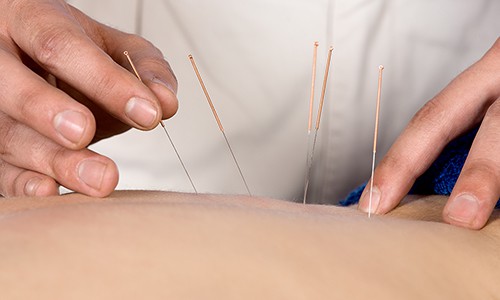
Dry neddling is another tool in our box that we as physios employ to provide pain relief from tight muscles. It’s a great way to ease muscle tension and relax the spasm around an inflamed joint. We get asked so many times about the difference between dry needling and acupuncture. So here’s some information that will help you in figuring out if you’d like to give dry needling a try and how beneficial it can be for you!
What is dry needling?
Dry needling is a scientifically supported treatment using very thin, sterile needles to help relieve issues such as pain and dysfunction in muscles, headaches and sinus problems. The needles are so thin you may not even feel them going in! If you do it might feel like a tiny pinch. There are different lengths and thicknesses of the needles depending on the desired effect and area of the body.
Dry needling vs Acupuncture
Acupuncture also uses thin needles placed in certain areas of the body, however this is based on traditional Chinese medicine. There is a heavy focus on the flow of energy or “Chi” which is believed to be present in all living things. According to Chinese Medicine, Chi flows through the body along 12 pathways called meridians. The insertion of needles is believed to redirect chi to relieve stress and pain.
Dry needling on the other hand is a western medicine and myotherapy technique. According to Wikipedia, it is also called “myofascial trigger point dry needling”. The stimulation the needles provide to the muscle is effective in reducing over-active muscle activation associated with trigger points. There are also electrical (nerve) and chemical (hormonal and neurotransmitter) changes that assist in the healing process.
What does it feel like? Are there any side effects?
As mentioned above, most people don’t feel any more than a pinch when the needles are inserted. Once the needles are in the muscle you may feel a deep ache and a twitch. These are normal sensations and are a good indicator that the needles are inserted in an effective area. Any side effects are short lived and should resolve on their own. These include slight bruising and tenderness, as well as some sweating or feeling cold. Fainting can occur in some people.
The most rare and severe side effect is when needles are inserted into the shoulder, neck or chest area. If this is done incorrectly and a lung is punctured it constitutes a medical emergency known as pneumothorax. This is an extremely rare risk when performed by a trained professional.
At Get Better Physiotherapy, we have massage therapists and physiotherapists that are specifically trained in performing dry needling and may recommend this as part of your treatment. If you would like to know more, please ask your therapist, they would be happy to answer any questions and ensure you are comfortable with your treatment. If you would like to make a booking for massage or physiotherapy please call 07 3800 3417 at Browns Plains.
Frequently Asked Questions About Dry Needling
Learn what to expect from dry needling, how it differs from acupuncture, and how it can support pain relief as part of your physiotherapy treatment.