
Okay, here’s the thing nobody tells you about postnatal exercise…
There’s this weird gap between “gentle walking and breathing exercises” and “back to your old workouts.”
And most women get stuck right in the middle of it.
You’re past those first fragile weeks. You’re ready for more. But every time you try to push harder, something feels off.
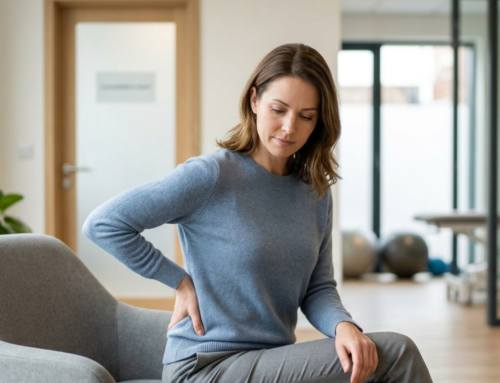
Your core doesn’t engage the way it used to. Your pelvic floor sends you warning signals. Your back aches in ways it never did before.
So you’re left wondering: “Am I doing too much? Not enough? What the hell am I supposed to be doing right now?”
This article is for you – the mum who’s ready to move beyond basic recovery but doesn’t want to screw things up by rushing back too fast.
If your core still feels weak months after birth, here’s why.
The difference between “bouncing back” and actually recovering properly often comes down to progression.
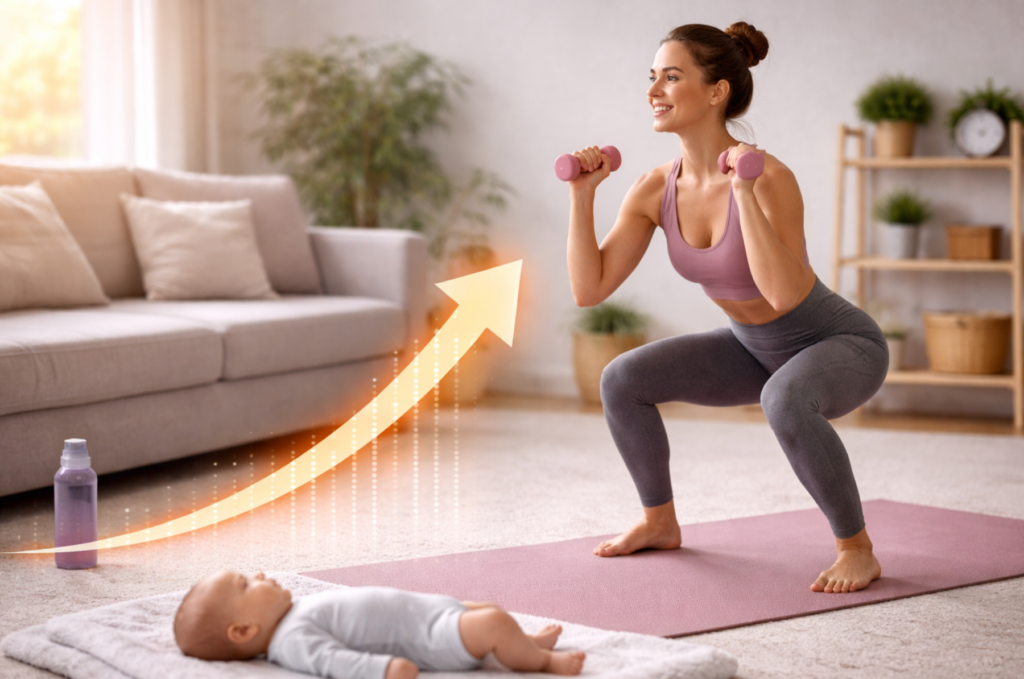
What Makes Postnatal Exercise Different
Early recovery exercise is about healing, reconnecting, and just getting through day-to-day life with your baby.
Postnatal exercise is different.
This is the stage where you begin to rebuild capacity.
That means working toward things like:
- Better strength and core control
- More challenging walking or cardio
- Resistance training
- Postnatal Pilates or classes
- Eventually, higher-impact exercise, running, or sport
Here’s the mistake most women make:
They either stay in the “gentle only” stage for way too long (because they’re scared), or they jump straight from walking to a full workout (because they’re frustrated).
Good postnatal exercise sits in the middle.
It gives your pelvic floor, abdominal wall, back, and whole body time to adapt as the load goes up.
And here’s what most programs ignore: Postnatal programming needs to account for fatigue, breastfeeding, sleep disruption, and any ongoing back pain, pelvic joint pain, or abdominal separation.
Because let’s be honest – you’re not training in ideal conditions here.
The Postnatal Exercise Ladder
A staged approach is one of the clearest ways to make postnatal exercise safer and more effective.
Think of it like climbing a ladder. You don’t skip rungs.
3 to 8 Weeks Postnatal
What it looks like: Walking, light gym work, postnatal abdominal and pelvic floor exercises, low-impact classes after the 6-week check
Main goal: Rebuild routine and control
8 to 12 Weeks Postnatal
What it looks like: Gradually increase weights, intensity, and challenge
Main goal: Build capacity
12 to 16 Weeks Postnatal
What it looks like: Assess pelvic floor and abdominal function before high impact, running, sport, or regular abdominal programs
Main goal: Test readiness
After 16 Weeks
What it looks like: Progress toward previous activity levels if symptoms stay calm
Main goal: Return to fuller training
AUSactive says women should usually wait until after their 6-week postnatal check before starting a group exercise program, returning to the gym, or personal training.
Between 12 and 16 weeks? That’s when abdominal and pelvic floor muscle testing is recommended before returning to higher-impact exercise, running, or sport.
Pelvic Floor First gives very similar guidance and says women can return to previous activity levels after 16 weeks if pelvic floor function has returned to normal and there’s no back pain, vaginal heaviness, or urine loss during or after exercise.
Notice the pattern here? It’s all about progression, not perfection.
Choosing the Right Type of Postnatal Exercise
The best postnatal exercise plan isn’t just about what’s popular or what your friends are doing.
It’s about what matches your current stage, your symptoms, and your goals.
Walking and Pram-Based Activity
Walking is still useful well beyond the early weeks.
It’s low-risk, easy to progress, and practical for new parents.
You can build from short walks into longer pram walks, hills, or interval-style walking as your energy and symptoms allow.
Plus, it gets you out of the house – which is honestly half the battle some days.
Pilates and Controlled Strength Work
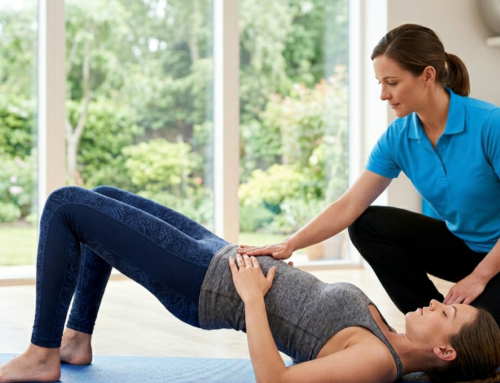
For many women, Pilates or physio-led strength training is the bridge between basic rehab and full exercise.
This stage is less about “feeling the burn” and more about learning how to manage pressure, posture, breathing, and load.
That’s often why Brisbane mums are choosing physio-led recovery over generic mum and bub classes.
The right program helps you rebuild deep support before asking for too much from the pelvic floor or abdominal wall.
Gym Training and Standard Workouts
After the 6-week check, many women can begin returning to the gym.
But that doesn’t mean going straight back to pre-pregnancy numbers.
We recommend maintaining posture, using light weights, and avoiding breath-holding in the 3 to 8-week stage.
From 8 to 12 weeks, intensity and weights can increase gradually.
And this is where a lot of frustration comes from:
A woman may be medically “fine,” but not yet physically ready for the way she used to train.
That gap? That’s what we’re trying to close.
When to Return to Running and Higher-Impact Exercise
This is the part many active women care about most.
If you loved running, sport, bootcamps, or stronger workouts before pregnancy, it’s totally normal to want them back.
But high impact is not the same as low-impact postnatal exercise.
And the gap matters.
NHS guidance says it’s usually a good idea to wait until after your 6-week postnatal check before starting high-impact exercise such as running or aerobics.
We recommend building low-impact exercise first, then steadily increasing toward high impact over the 3 to 4-month period after birth.
AUSactive says abdominal and pelvic floor testing should happen before returning to higher-impact exercise, running, or sport – usually around 12 to 16 weeks postnatal.
So for many women, a sensible return-to-running plan looks like this:
Before 12 weeks: Build your base
Around 12 to 16 weeks: Assess pelvic floor and abdominal readiness
After that: Progress only if there’s no leaking, heaviness, back pain, or loss of control
That’s how you know if you’re ready to return to exercise the safe way.
A Simple 3-Step Progression Plan
Step 1: Build Your Base
Start with regular walking, postnatal core work, pelvic floor exercises, and simple strength work that feels controlled.
Nothing fancy. Just consistent.
Step 2: Add Load Gradually
Increase weights, class difficulty, and workout time slowly.
One new stress at a time usually works better than changing everything at once.
Step 3: Earn Impact
Before returning to running, jumping, or sport, make sure your pelvic floor, abdominal wall, and back are coping well with lower-impact training.
This is where many women do best with a plan rather than random workouts.
Stop guessing. Get a proper plan to rebuild your core and strength.
What Good Progression Actually Feels Like
Good postnatal exercise progression usually feels like this:
- You finish a session feeling worked, not wrecked
- Your symptoms stay stable during and after exercise
- You recover well enough to care for your baby and manage the next day
- Your back, pelvic floor, and tummy feel more supported over time
- You feel more confident, not more nervous, as training builds
If every workout leaves you with heavier bleeding, increased pelvic pressure, urinary leakage, more back pain, or a sense that something is slipping?
That’s not a sign to push harder.
It’s a sign to adjust the plan.
We advise slowing down or reducing intensity if exercise causes back pain, vaginal heaviness, urine loss, or other symptoms suggesting pelvic floor or abdominal support isn’t coping well.
What Often Gets in the Way
Here’s the reality:
Postnatal exercise doesn’t happen in a perfect training environment.
It happens while you’re dealing with sleep loss, feeding, lifting, childcare, work, stress, and all the new routines of parenthood.
Fatigue, breastfeeding, hormonal changes, and the demands of life with a baby can all affect how a program should be built.
Overdoing exercise can make you feel exhausted or make postnatal bleeding heavier again.
That doesn’t mean you can’t get fit again.
It means the best postnatal plans are realistic.
They work with your life, not against it.
When Postnatal Exercise Needs More Support
Even this progression-focused article needs one important reality check.
If postnatal exercise keeps bringing on urine loss, vaginal heaviness, pelvic pain, back pain, or abdominal doming, it’s worth getting assessed.
You should consult a women’s health physiotherapist before returning to moderate or intense exercise, especially if there are urinary or bowel concerns or a heavy or dragging feeling in the vagina.
Pelvic floor and core strength should be optimized before progressing impact, load, and volume.
That doesn’t mean you’re fragile.
It means you deserve better information than “just keep trying.”
How Women’s Health Physiotherapy Can Help
This is where a postnatal assessment becomes valuable.
We can look at how your pelvic floor, abdominal wall, breathing, posture, and movement are handling load, then match your program to your actual stage.
At Get Better Physiotherapy in Regents Park, we help women move from early recovery into real training with more confidence.
For some, that means building a gym plan.
For others, it means using Pilates to rebuild control before returning to running or sport.
For many, it means finally understanding why generic online workouts never felt right.
You deserve to feel strong and confident in your body again.
Build Back to Fitness the Right Way
Postnatal exercise shouldn’t feel like a guessing game.
It should feel like a clear progression from recovery into strength, fitness, and the activities you actually want to return to.
If you’re ready for more than early recovery work, but you want to rebuild properly, book a women’s health physiotherapy appointment with Get Better Physiotherapy in Regents Park.
We can help you find the right starting point, progress safely, and return to exercise with a plan that fits your body and your life.

Leave A Comment