
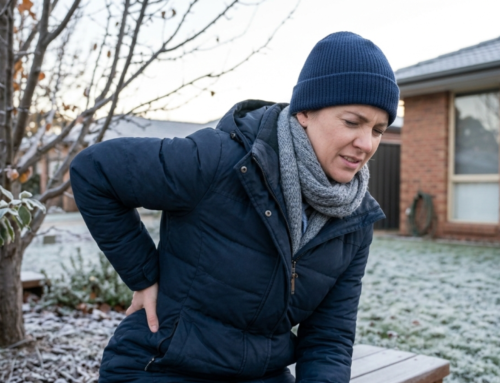
Back pain during pregnancy can make simple daily activities feel much harder. Sitting at work, standing in the kitchen, walking, sleeping, lifting groceries, or caring for other children may all become uncomfortable as your body changes.
Many pregnant women search for pregnancy back pain physio tips because they want safe, realistic advice they can use during everyday life. While every pregnancy is different, small changes to posture, movement, lifting, rest, and exercise can often reduce unnecessary strain.
This guide shares practical daily movement advice from a physiotherapy perspective, plus guidance on when pregnancy back pain should be assessed by a physio.
Why Back Pain Is Common During Pregnancy
Back pain is common during pregnancy because your body is adapting to major physical changes. These changes are normal, but they can increase load through your lower back, pelvis, hips, and muscles.
Common reasons pregnancy back pain can develop include:
- A growing belly changing your centre of gravity
- Increased load through the spine, pelvis, and hips
- Posture changes, such as a more arched lower back
- Stretching of abdominal muscles
- Reduced core support
- Hormonal changes affecting ligaments and joints
- Muscle tightness around the back, hips, glutes, and shoulders
- Prolonged sitting or standing
- Lifting toddlers, bags, groceries, or work items
- Difficulty sleeping comfortably
Back pain may feel like a dull ache, tightness, stiffness, one-sided discomfort, or pain that worsens with certain movements. Some women notice pain after sitting for too long, while others feel it when walking, rolling in bed, standing, or lifting.
Although pregnancy back pain is common, it should not be brushed off if it is affecting your sleep, movement, work, or daily life.
How Pregnancy Changes Posture, Core Support, and Movement
As pregnancy progresses, your body naturally changes the way it moves and supports itself.
Your growing belly shifts your weight forward. To balance this, you may stand with your lower back more arched, your ribs lifted, or your pelvis tilted. Over time, this can place extra strain on your lower back and hips.
Your abdominal muscles also stretch as your baby grows. These muscles are part of your core support system, which helps stabilise your spine and pelvis during movement. When they are stretched, your body may rely more heavily on your back, hip, and pelvic muscles.
These changes can affect everyday tasks such as:
- Getting out of bed
- Sitting at a desk
- Standing while cooking
- Walking uphill
- Climbing stairs
- Lifting a toddler
- Carrying shopping bags
- Reaching into the car
- Rolling over in bed
Pregnancy can also change how you breathe, brace, and move under load. For example, you may start holding your breath when lifting or pushing yourself up from a chair. This can increase pressure through the abdomen and may make movement feel harder.
The goal is not to maintain perfect posture all day. The goal is to reduce repeated strain and help your body move with better support.
Physio Tips for Safer Sitting, Standing, and Walking
Small changes to sitting, standing, and walking can make a meaningful difference when managing pregnancy back pain.
Sitting tips
If you sit for work, driving, meals, or rest, aim to support your spine and change positions often.
Try these tips:
- Sit with both feet supported on the floor
- Use a small cushion or rolled towel behind your lower back
- Keep your hips slightly higher than your knees if comfortable
- Avoid slumping for long periods
- Bring your work screen closer rather than leaning forward
- Take short movement breaks every 30 to 45 minutes
- Avoid crossing your legs for long periods if it increases pelvic or back discomfort
A good sitting position should feel supported, not rigid. You do not need to sit perfectly upright all day. Your back usually prefers regular movement over one “perfect” posture.
Standing tips
Standing can become uncomfortable as pregnancy progresses, especially if your lower back arches or your weight shifts forward.
Try these tips:
- Keep your weight evenly spread through both feet
- Soften your knees rather than locking them
- Gently stack your ribs over your pelvis
- Avoid leaning into one hip for long periods
- Use a small footrest and alternate one foot up if standing at a bench
- Take sitting breaks when needed
- Wear supportive footwear where possible
If you stand for work, small changes throughout the day can help reduce accumulated strain.
Walking tips
Walking can be helpful during pregnancy, but pace, distance, footwear, and terrain matter.
Try these tips:
- Start with shorter walks and build gradually
- Choose even surfaces if your back or pelvis feels sensitive
- Keep your stride comfortable, not forced
- Avoid pushing through sharp pain
- Wear supportive shoes
- Use hills and stairs carefully if they aggravate symptoms
- Stop or reduce distance if pain increases later that day
If walking causes pelvic pain, one-sided back pain, heaviness, or symptoms that linger, a physiotherapy assessment can help identify what needs support.
How to Lift, Bend, and Carry With Less Back Strain
Lifting and bending are common triggers for pregnancy back pain. This is especially true if you are caring for toddlers, working in a physical job, lifting groceries, or doing household tasks.
The aim is to reduce awkward load on your back.
Safer lifting tips
- Keep the object close to your body
- Bend through your knees and hips rather than folding from your waist
- Exhale gently as you lift
- Avoid holding your breath
- Turn with your feet instead of twisting through your back
- Split heavy loads into smaller loads
- Ask for help with awkward or heavy items
- Use benches, chairs, or prams to reduce repeated lifting from the floor
Toddler lifting tips
If you are pregnant and caring for a toddler, lifting can be hard to avoid.
Try:
- Encouraging your toddler to climb onto a chair, step, or couch before you lift them
- Sitting down for cuddles instead of lifting when possible
- Carrying them close to your body
- Alternating sides if you must carry
- Avoiding long one-sided hip carrying
- Using a pram for longer distances
Household task tips
For tasks like laundry, dishes, cleaning, and making beds:
- Bring the task closer to waist height where possible
- Avoid repeated twisting
- Use a laundry basket on a chair instead of the floor
- Take breaks during vacuuming or mopping
- Step closer to the task instead of reaching forward
These changes may seem small, but pregnancy back pain often builds from repeated daily strain. Better movement habits can help reduce that load.
Sleeping and Rest Positions That May Ease Pregnancy Back Pain
Sleep can become difficult during pregnancy, especially if your back, hips, or pelvis ache at night.
Side sleeping is often more comfortable as pregnancy progresses. The right support can reduce twisting and pressure through your back and pelvis.
Try these rest position tips:
- Sleep on your side with a pillow between your knees
- Place a small pillow under your belly for support
- Keep your knees slightly bent
- Hug a pillow to support your upper body
- Use a pillow behind your back if it helps you feel supported
- Try a pregnancy pillow if regular pillows are not enough
- Roll through your side when getting in and out of bed
- Avoid sitting straight up from lying down if it strains your back
Getting out of bed with less strain
Instead of sitting straight up:
- Roll onto your side.
- Bend your knees slightly.
- Let your legs move toward the edge of the bed.
- Push through your arms to come up.
- Exhale as you move.
This can reduce strain through your lower back and abdomen.
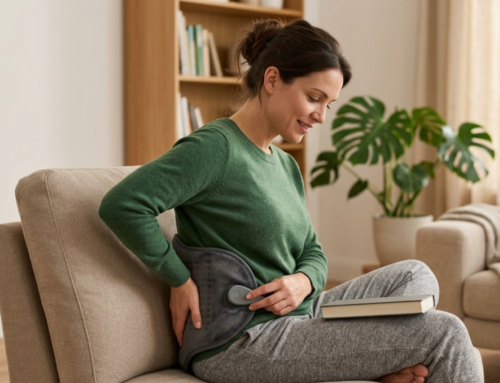
Rest positions during the day can also help. If your back aches after standing, try lying on your side with pillows, sitting with lumbar support, or using a supported reclined position for short periods.
Gentle Movement and Strength Exercises to Support Your Back
Gentle movement and strengthening can help support pregnancy back pain when the exercises are appropriate for your body and stage of pregnancy.
The goal is not to push hard. The goal is to maintain mobility, improve support, and reduce unnecessary strain.
Pregnancy-safe options may include:
- Gentle walking
- Pelvic tilts
- Cat-cow movement
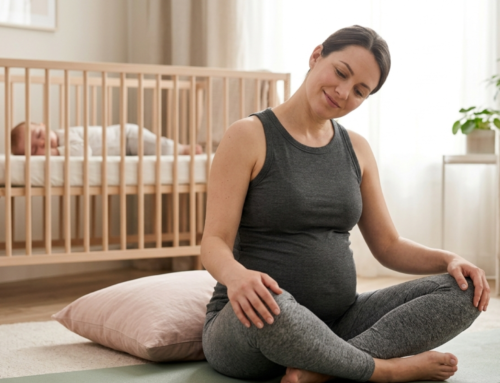
- Seated posture resets
- Side-lying hip strengthening
- Supported squats
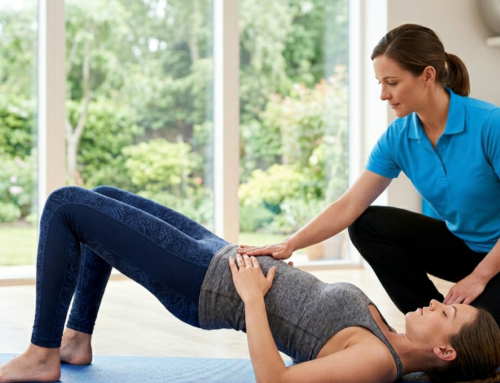
- Gentle glute bridges, if comfortable and appropriate
- Breathing exercises
- Pregnancy-modified Pilates
- Gentle upper back mobility exercises
Simple movement examples
Seated posture reset
Sit tall with both feet on the floor. Gently roll your shoulders back, soften your ribs, and take a slow breath into your sides. Repeat several times during the day.
Pelvic tilts
In a comfortable position, gently rock your pelvis forward and back. Keep the movement small and smooth.
Cat-cow
On hands and knees, slowly round and relax your back within a comfortable range. Stop if it causes wrist, pelvic, or back discomfort.
Side-lying leg lifts
Lying on your side with support, gently lift the top leg a small distance to work the hip muscles. Keep the movement controlled.
Exercise should not increase sharp pain, heaviness, dizziness, bleeding, or unusual symptoms. If you are unsure what is safe, check with your GP, midwife, obstetrician, or physiotherapist.
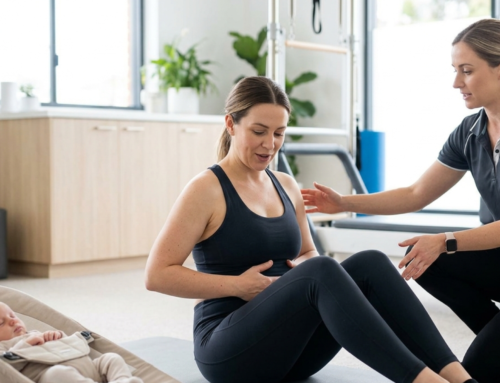
A physiotherapist can tailor exercises to your symptoms, fitness level, pregnancy stage, and goals. At a physiotherapy and Pilates centre, this may include pregnancy-appropriate Pilates and core support work to help you move with more confidence.
Common Mistakes That Can Make Pregnancy Back Pain Worse
Pregnancy back pain can worsen when daily habits repeatedly overload the same areas.
Common mistakes include:
Sitting for too long without moving
Even a good chair will not help much if you stay in one position for hours. Regular movement breaks are important.
Pushing through pain
Pain is information. If an activity consistently worsens your symptoms, your body may need a different strategy.
Bending from the waist
Repeatedly folding forward to lift from the floor can strain your back. Bend through your hips and knees where possible.
Holding your breath during effort
Breath-holding can increase pressure and make lifting feel harder. Try exhaling as you lift, push, or stand.
Carrying loads on one side
Carrying a toddler, bag, or groceries on one side may increase uneven strain through your back and pelvis.
Sudden exercise changes
Starting a new intense workout or increasing activity too quickly can aggravate symptoms.
Ignoring footwear
Unsupportive shoes may increase strain during walking or standing, especially if your feet and posture are changing.
Waiting too long for help
Many women wait until pain becomes severe before seeking support. Early assessment can help prevent symptoms from affecting more of your daily life.
Avoiding these mistakes does not mean avoiding activity. It means choosing movement strategies that better match your body’s current needs.
When Pregnancy Back Pain Should Be Assessed by a Physio
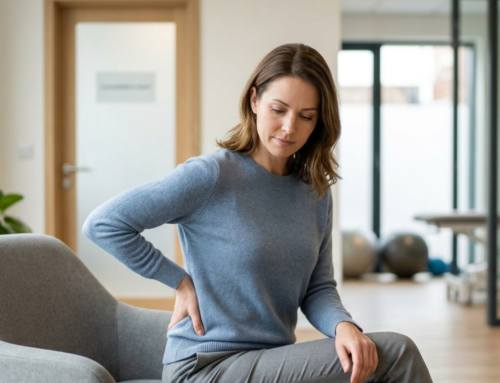
Pregnancy back pain should be assessed by a physio when it is persistent, limiting, or affecting your confidence with movement.
Consider booking a physiotherapy assessment if:
- Pain is not improving with rest or simple changes
- Pain affects walking, sitting, sleeping, or work
- Pain is sharp, catching, or one-sided
- Pain spreads into the hip, buttock, groin, or leg
- You have pins and needles, numbness, or weakness
- You have difficulty rolling in bed or climbing stairs
- You are avoiding movement because of pain
- You are unsure which exercises are safe
- You have pelvic girdle pain symptoms
- You are caring for toddlers and struggling with lifting
- Pain keeps returning after massage or rest
You should seek urgent medical advice if back pain is linked with symptoms such as bleeding, fever, severe abdominal pain, sudden swelling, faintness, severe headache, or any concern about your baby’s movements.
Physiotherapy can help identify what is contributing to your pain. This may include posture, movement habits, muscle tightness, joint irritation, reduced core support, hip weakness, or pelvic mechanics.
A good assessment gives you more than a diagnosis. It gives you a practical plan for daily movement, symptom relief, safe exercise, and longer-term strength.
Pregnancy Back Pain Physiotherapy in Regents Park
If you are looking for pregnancy back pain physio tips in Regents Park, Get Better Physiotherapy and Pilates Centre can help you understand what is causing your pain and how to move more safely.
The approach is based on a clear three-step process:
- Find the root cause
Your physiotherapist performs a full assessment to understand where your back pain may be coming from and how it affects your daily life. - Get pain relief
Hands-on physiotherapy and manual therapy techniques may be used where appropriate to help ease pain and muscle tension. - Get strong
You receive a tailored plan that may include pregnancy-safe exercises, movement advice, posture support, core rehab, and Pilates-based strengthening where suitable.
This approach can help if your pain started at work, during exercise, while caring for children, or during everyday tasks at home.
Pregnancy back pain is common, but you do not have to manage it alone. With the right guidance, you can learn safer ways to sit, stand, walk, lift, rest, and exercise through pregnancy.
Book a consult with Get Better Physiotherapy and Pilates Centre in Regents Park, or call 07 3800 3417 to speak with the friendly team about pregnancy back pain physiotherapy and safe movement support.
Leave A Comment