
Let’s talk about something that’s frustrating…
You’ve been “cleared” to exercise. You’re past the newborn fog. You’re ready to feel like yourself again.
So you start working out.
And something just feels… wrong.
Maybe walking is fine, but the moment you try a class, your pelvic floor sends you warning signals.
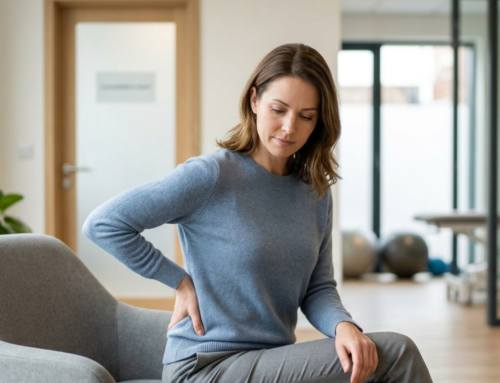
Maybe your back flares up every time you attempt to get stronger.
Maybe your tummy feels completely disconnected, like it’s not even part of your body anymore.
And you’re left wondering: “Is this normal? Am I just out of shape? Or is something actually wrong?”
Here’s the truth nobody tells you:
You’re not “just out of shape.”
The real reason exercise doesn’t feel right anymore is often that your body needs a different kind of recovery plan – not more willpower, not more motivation, not more “pushing through.”
Your body isn’t broken after birth. But if exercise still doesn’t feel right, your core and pelvic floor may need proper rehab, not more guessing.
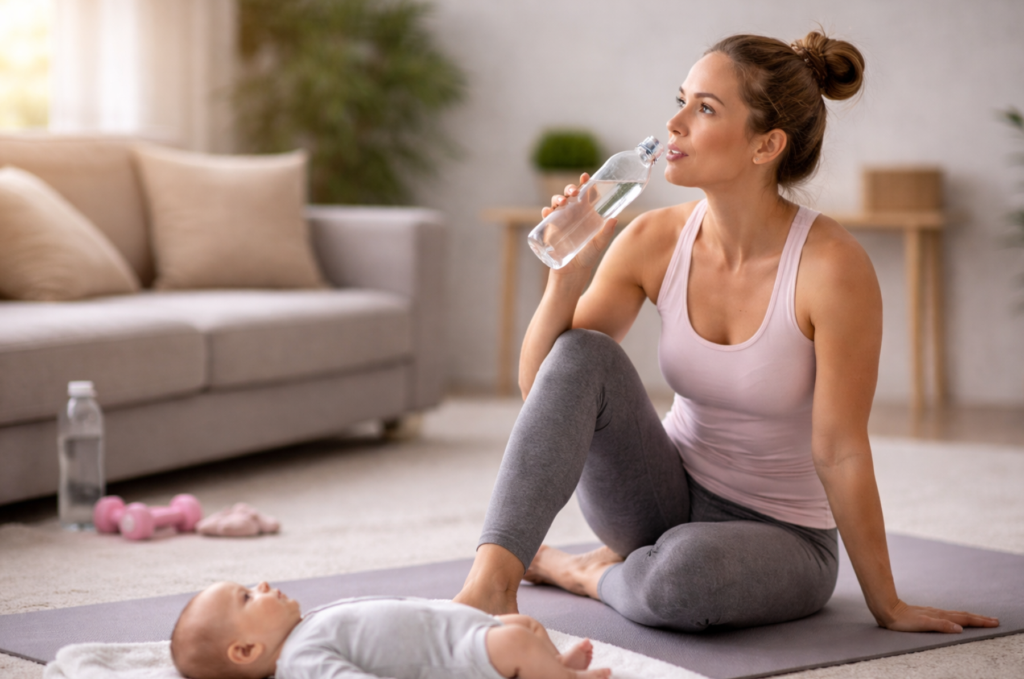
Why Postpartum Exercise Can Feel Fine on Paper, but Wrong in Real Life
A lot of women get told some version of “you’ve had your check, you can exercise now.”
That sounds simple.
But it often doesn’t match real life.
Here’s what actually happens:
Pregnancy and childbirth can affect your pelvic floor, abdominal wall, breathing pattern, posture, back, hips, and the way pressure moves through your body.
Postpartum pelvic floor problems can include urinary incontinence, prolapse, pelvic girdle pain, and low back pain.
That means postpartum exercise isn’t just about whether you’ve been “cleared.”
It’s about whether your body is actually tolerating the load.
You might technically be active, but still notice:
- Leaking when you exercise, cough, or laugh
- Heaviness or pressure through the pelvic floor
- Back or pelvic pain after classes or gym sessions
- Abdominal doming or a disconnected feeling through the tummy
- Fatigue that feels completely disproportionate to the workout
And here’s what makes it even harder:
You feel like you should be able to do this. You see other mums bouncing back. You wonder what’s wrong with you.
Nothing is wrong with you.
Your body is just telling you it needs something different right now.
The Question to Ask Is Not “Can I Exercise?”
The better question is:
“How is my body responding to the exercise I’m doing?”
That shift changes everything.
Because here’s the thing – a workout is not automatically a good idea just because you can physically complete it.
You can finish a class and still feel like something’s off.
You can get through a gym session and spend the rest of the day feeling worse.
If your symptoms worsen during or after exercise, your current routine may be too much, too soon, or simply the wrong type for your body right now.
And that’s okay.
It doesn’t mean you’re weak. It means you’re listening.
Green Lights and Warning Signs
Here’s a simple way to look at postpartum exercise tolerance:
Green Lights (Good Signs)
- You feel worked, but symptoms stay stable and settle well afterward
- Energy improves over time and recovery feels manageable
- You feel more confident and capable as weeks go by
- You actually want to keep going instead of dreading the next session
Warning Signs (Time to Adjust)
- You leak, feel heaviness, dragging, bulging, or increased back or pelvic pain
- Symptoms linger into the next day or keep building week after week
- You feel worse after exercise, not better
- You’re constantly second-guessing whether you should be doing this
We recommend reducing exercise load and seeking advice if activity causes urine loss, pelvic or vaginal heaviness, back pain, tummy pain, difficulty walking, or vaginal bleeding.
But more than that?
We recommend trusting yourself when something doesn’t feel right.
What “Exercise Doesn’t Feel Right” Usually Looks Like
This is where a lot of women feel stuck, because the problem is real, but hard to explain.
You try to tell someone and they say, “Oh, that’s normal after having a baby.”
But it doesn’t feel normal to you.
Pelvic Floor Signs
You may notice:
- Leaking urine (and not just a tiny bit – sometimes enough that you’re checking if you need to change)
- Urgency (suddenly needing to pee right now and barely making it)
- Heaviness or dragging sensation (like something’s pulling down)
- A bulging feeling (especially when you’re tired or at the end of the day)
- Reduced control during exercise (and the constant worry about when it might happen)
Bladder weakness after birth is common, affecting around 1 in 3 women at some point after childbirth.
But here’s what matters:
Common doesn’t mean you have to accept it forever.
Common doesn’t mean it’s not worth fixing.
Abdominal Wall Signs
You might feel:
- Doming through the midline when you try core exercises (like your belly is creating a ridge or bulge)
- Weakness through the lower tummy (like there’s just… nothing there)
- A pulling or unsupported feeling (especially when you stand up or lift your baby)
- Trouble generating tension during exercise (like your muscles aren’t responding the way they used to)
Avoid sit-ups or crunches while abdominal separation is present, and instead use more appropriate early abdominal work such as pelvic tilts and bracing.
But honestly? Most women just want to know why their tummy feels so different and when it’s going to feel normal again.
Back and Pelvic Pain Signs
This is one of the most common reasons women stop and start exercise over and over again.
Pelvic floor weakness can contribute to lower back pain after birth.
If every attempt to get active leads to back pain, pelvic pain, or a flare-up that makes daily life harder?
That usually means you need a better progression, not more willpower.
And definitely not more guilt about “not trying hard enough.”
Why Generic Advice Often Falls Short
This is where women often get frustrated.
You search online. One website says “take it easy.” Another says “start rebuilding now.” A fitness page tells you to challenge yourself.
A social media reel tells you to do deep core work every day.
None of it seems to answer the real question:
What does MY body need right now?
Generic postpartum exercise advice often misses the context you’re living in:
- Broken sleep (like, really broken – not just “a bit tired”)
- Breastfeeding (which affects your energy, hormones, and recovery)
- Lifting and carrying a baby constantly (which is basically a workout in itself)
- Long feeding sessions (when you’re stuck on the couch for hours)
- Returning to work (and trying to fit everything in)
- Low energy (the kind where even a shower feels like an achievement)
- Previous birth trauma or stitches (that still don’t feel quite right)
- Pelvic floor symptoms that make you second-guess everything (and avoid certain activities completely)
That’s why a woman can be highly motivated and still feel like she’s doing the wrong thing.
It’s not you. It’s the advice.
You’re not failing. The plan just doesn’t fit your reality.
A Simple 3-Step Readiness Check
Step 1: Check Symptoms During Exercise
Are you getting leaking, pressure, back pain, pelvic pain, abdominal doming, or a sense of instability while moving?
Not just once. But consistently. Regularly. In a way that makes you nervous.
Step 2: Check Symptoms After Exercise
Do you recover well, or do you feel worse for the rest of the day or the next morning?
Are you spending the afternoon on the couch because you overdid it?
Are you waking up sore in places that don’t feel like normal muscle soreness?
Step 3: Check Confidence
Do you feel in control, or are you bracing, rushing, holding your breath, or pushing through because you think you should be able to do more?
Are you actually enjoying this, or are you just ticking a box?
That’s often the postnatal assessment women need.
Not because their body is damaged, but because progression should match the person, not the program.
When You Should Slow Down and Get Assessed
It’s worth getting help if postpartum exercise keeps triggering:
- Leaking urine or bowel symptoms
- Vaginal heaviness, dragging, or bulging
- Back pain, pelvic pain, or hip pain
- Abdominal doming or poor core control
- Increased bleeding with activity
- A persistent feeling that something is just not right
That last one matters more than you think.
A lot of women minimize symptoms because they feel guilty complaining when they have a healthy baby.
They tell themselves, “It’s not that bad.”
“Other women have it worse.”
“I should just be grateful.”
But here’s the thing:
You can be grateful for your baby and want to feel better in your body.
Those two things aren’t mutually exclusive.
Ignoring postpartum pain won’t make it go away.
It can just become your new normal.
And you deserve better than that.
When It Might Be More Than an Exercise Issue
Some symptoms need medical review, not just an exercise adjustment.
Seek urgent medical advice if you have:
- Severe headache
- Visual changes
- Chest pain
- Shortness of breath
- Heavy bleeding
- Calf pain or swelling
- Fever
- Rapidly worsening symptoms
Postpartum preeclampsia can happen after birth and may cause severe headache, vision changes, upper abdominal pain, breathing difficulty, and reduced urination.
If you’re experiencing any of these, don’t wait – get checked immediately.
Your instincts matter. Trust them.
How Women’s Health Physiotherapy Can Help
If exercise feels wrong, the answer is not always to stop completely.
Often, the answer is to get assessed properly.
And here’s what that actually means:
It means finally having someone listen to you.
It means getting answers instead of being told “that’s just what happens after birth.”
It means understanding what’s actually going on in your body instead of guessing.
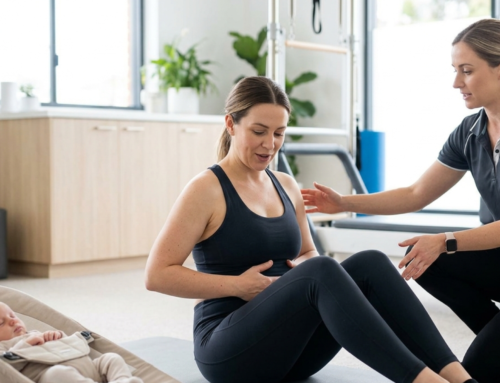
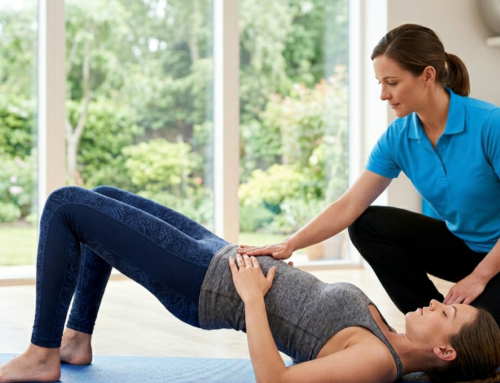
A women’s health physiotherapy assessment can help identify whether the issue is mainly:
- Pelvic floor dysfunction
- Abdominal wall pressure management
- Abdominal separation
- Back or pelvic pain
- Poor exercise progression
- Breathing and bracing strategy
- A combination of several factors
Physiotherapy can help with pelvic floor weakness, abdominal separation, back pain, and safe return to exercise after having a baby.
But more than that?
It can give you clarity.
Relief.
A plan that actually makes sense for your body and your life.
At Get Better Physiotherapy in Regents Park, this is exactly the kind of support we provide.
We help women who feel weak, unstable, confused, or dismissed after birth – especially when they’ve tried to get back into it and it still doesn’t feel right.
Most women tell us they feel this huge sense of relief after their first appointment.
Not because we “fixed” everything in one session.
But because they finally understand what’s happening and have a clear path forward.
The Goal Is Not to Push Through. It’s to Progress With Confidence
Postpartum exercise should leave you feeling more capable over time, not more confused.
If your core still feels weak months after birth, if your back keeps flaring up, or if exercise brings on pressure, pain, leaking, or heaviness?
That doesn’t mean you’ve failed.
It doesn’t mean you’re broken.
It doesn’t mean you’re not trying hard enough.
It usually means your body needs a more specific plan.
One that’s tailored to where you actually are right now, not where you think you “should” be.
You deserve to feel strong and confident in your body again.
You deserve to exercise without fear.
You deserve answers, not guesswork.
If postpartum exercise doesn’t feel right anymore, book a women’s health physiotherapy appointment with Get Better Physiotherapy in Regents Park.
A tailored assessment can help you find out what’s actually going on, what to change, and how to move forward safely.
Because you’re not imagining it.
And you’re definitely not alone.
Leave A Comment